
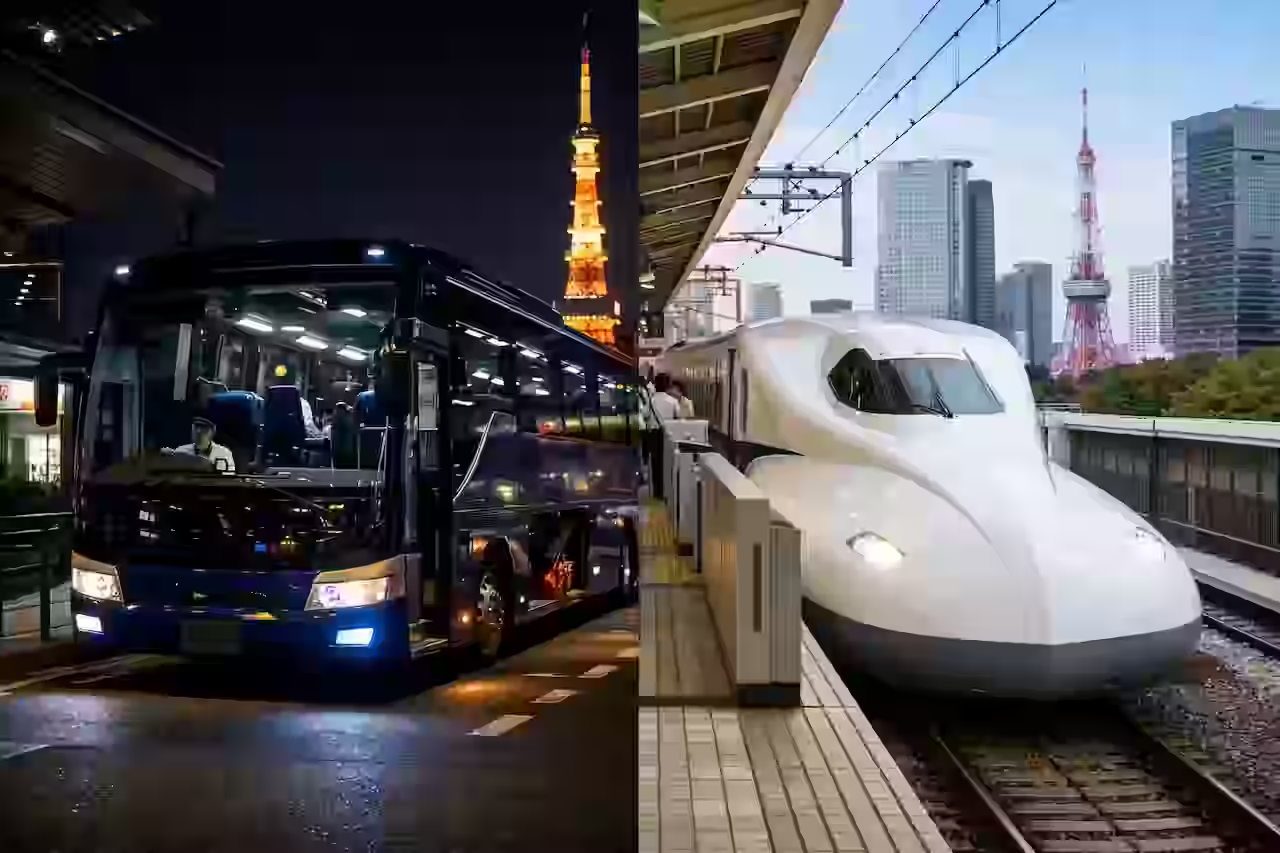
When traveling from Tokyo to other regions, many people face the dilemma of choosing between an overnight bus and the Shinkansen bullet train. Each option has its pros and cons, and the best choice depends on your travel style and budget. In this article, we’ll compare both options from a cost-performance perspective using actual routes as examples.
Price Comparison: A Significant Difference
Let’s start with the most important factor: cost.
Tokyo → Osaka
- Night bus: ¥3,000–¥6,000
- Shinkansen (Nozomi reserved seat): approximately ¥13,870
- Difference: ¥7,000–¥10,000
Tokyo → Nagoya
- Night bus: ¥2,500–¥5,000
- Shinkansen (Nozomi reserved seat): approximately ¥11,300
- Difference: ¥6,000–¥8,000
Tokyo → Sendai
- Night bus: ¥3,500–¥6,500
- Shinkansen (Yamabiko reserved seat): approximately ¥11,410
- Difference: ¥5,000–¥8,000
Looking at price alone, the night bus is the clear winner. Round-trip savings of over ¥10,000 are not uncommon.
Time Efficiency: More Even Than You’d Think?
While the Shinkansen appears overwhelmingly faster at first glance, night buses have a unique advantage: you can sleep while traveling.
Tokyo → Osaka Travel Time
- Night bus: approximately 8–9 hours (departs 10 PM → arrives 6–7 AM)
- Shinkansen: approximately 2.5 hours
With a night bus, you arrive at your destination while you’re sleeping. In other words, travel time is essentially zero. By departing Friday night and arriving Saturday morning, you can enjoy a full day of sightseeing, making it ideal for maximizing weekend trips.
On the other hand, while the Shinkansen’s actual travel time is shorter, it uses valuable daytime hours. However, the ability to travel comfortably and work or read during the journey is a major advantage.
Comfort: Opinions Vary
Shinkansen Comfort The Shinkansen offers spacious seats with legroom, well-equipped toilets and vending machines. With minimal shaking, you can easily work on your laptop or read. In terms of travel comfort, the Shinkansen is overwhelmingly superior.
Night Bus Comfort Night buses, on the other hand, have narrow seats and require maintaining the same position for long periods. However, premium night buses with “3-row seats,” “independent seats,” and “fully reclining” options have become more common recently, offering greater comfort at higher prices.
Night buses can be challenging for larger individuals, people with back problems, or those particular about their sleep. Conversely, many younger travelers and those confident in their stamina report sleeping just fine on night buses.
Hotel Cost Savings
A hidden benefit of night buses is saving on accommodation costs.
Consider a 2-day, 1-night trip to Osaka. With the Shinkansen, you’d need to stay Friday night, costing ¥5,000–¥10,000 for a hotel. However, with a night bus departing Friday evening and arriving Saturday morning, you eliminate this expense.
Real Cost Comparison (Tokyo → Osaka, 2 days/1 night)
- Shinkansen: Round-trip ¥27,740 + 1 hotel night ¥7,000 = approximately ¥34,740
- Night bus: Round-trip ¥10,000 = approximately ¥10,000
- Difference: approximately ¥24,740
With these savings, you can freely enjoy local cuisine, souvenirs, and tourist attractions without worrying about the cost.
Who Should Choose Which?
Night Bus Recommended For:
- Students and young travelers prioritizing budget
- Working professionals wanting to maximize their weekends
- People who can sleep on buses
- Those who enjoy the journey itself
- Solo travelers or trips with close friends
Shinkansen Recommended For:
- Those prioritizing comfort and time efficiency
- People with physical concerns or elderly travelers
- Business travel
- Families with small children
- Those wanting to work or read during travel
Middle-Ground Options
It’s not just a binary choice between night bus and Shinkansen.
Early Morning Shinkansen Taking the first Shinkansen allows you to sightsee all day without the discomfort of an overnight bus ride. You can still make effective use of your time without pushing yourself the night before.
Budget Airlines (LCC) Depending on the route, low-cost carriers can be cheaper than the Shinkansen and more comfortable than night buses. However, you need to factor in access time and costs to the airport.
Highway Bus (Daytime) While not as cheap as night buses, daytime highway buses are significantly cheaper than the Shinkansen and let you enjoy the scenery. It’s a good option for those who don’t want to sacrifice sleep quality.
Conclusion: Choose According to Your Travel Style
There’s no definitive answer as to which is better—night bus or Shinkansen. What matters is choosing based on your travel purpose, budget, stamina, and how you want to use your time.
The basic rule is night bus for budget priority and Shinkansen for comfort priority, but if you want to “maximize your weekend” and “save on accommodation,” the value of night buses is high even with some discomfort.
Also, it’s smart to mix and match—taking the night bus outbound to save money and the Shinkansen back when you’re tired and want comfort.
Everyone enjoys travel differently. Use this article as a reference to achieve the best budget travel experience for you.
Check here for “Night Bus vs Shinkansen: Budget Travel Comparison Guide (From Osaka)” version

Comments